
Seasonal occupancy can change wastewater loading quickly. Schedule by service history, tank capacity, measured solids, and planned occupancy, and confirm truck access before the route crosses Matlacha.
Plan service around seasonal occupancy
A return to full occupancy can reveal a tank or effluent filter that was already near its service limit. Review the last pump date before arrival, spread out laundry and other heavy water use, and address slow drains or alarms promptly.
Set the schedule from service records and tank measurements
Additives do not replace removal of accumulated sludge and scum. A septic inspection can measure the tank, check the effluent filter and baffles, and help set a service interval for the way the property is actually used.
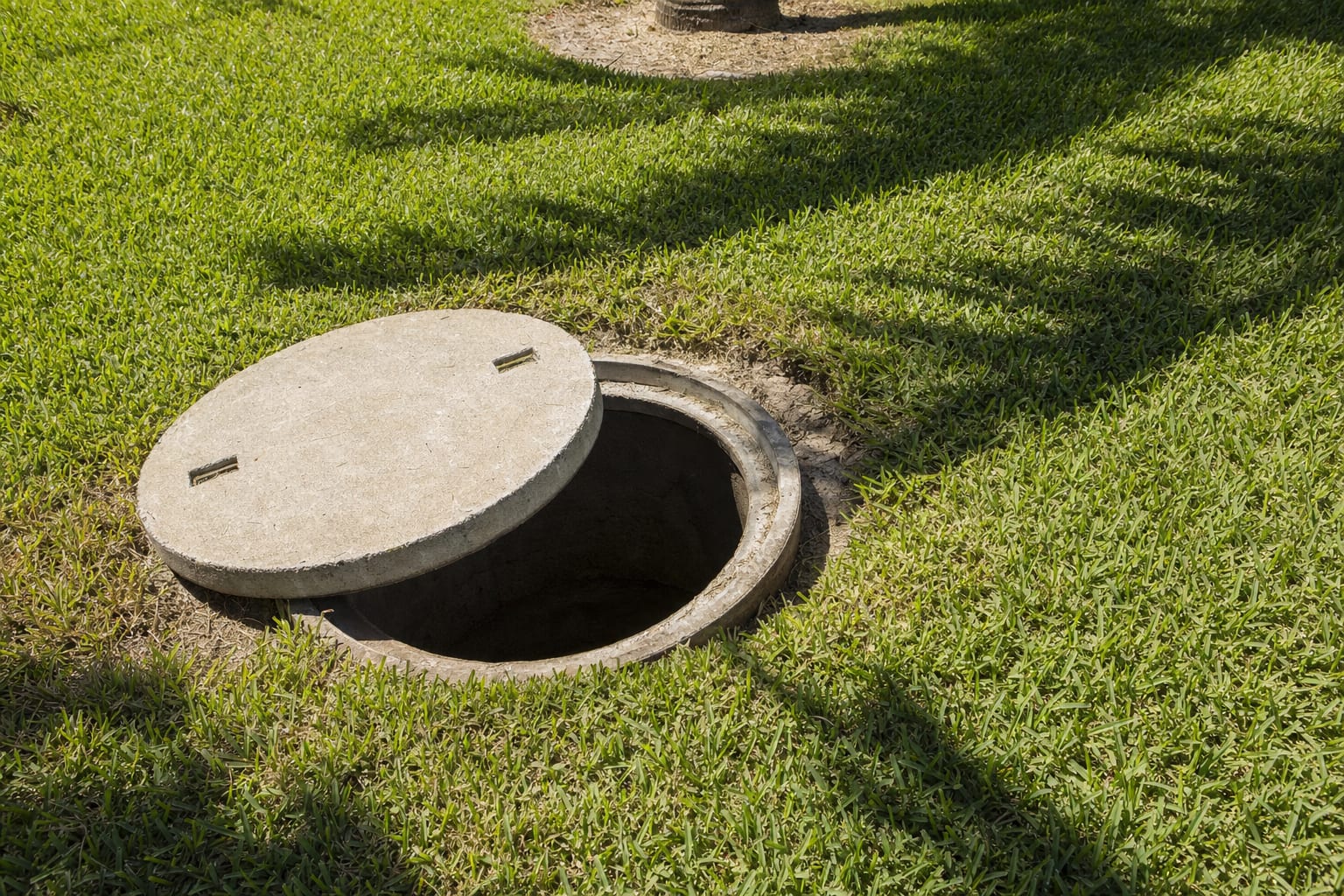
Check the system after the rainy season
Southwest Florida takes roughly 57 inches of rain a year, two-thirds June through September. Rule 62-6.006(2), F.A.C. requires 24 inches between a drainfield and the seasonal high water table. On low island lots that clearance is why replacements become mound systems on clean sand fill, which creates an elevated mound system.
After heavy rain or flooding, reduce water use until surrounding water recedes. UF/IFAS publication AE591 covers flooded systems; if wet ground, odors, or slow drains remain, review drainfield repair and arrange an inspection.
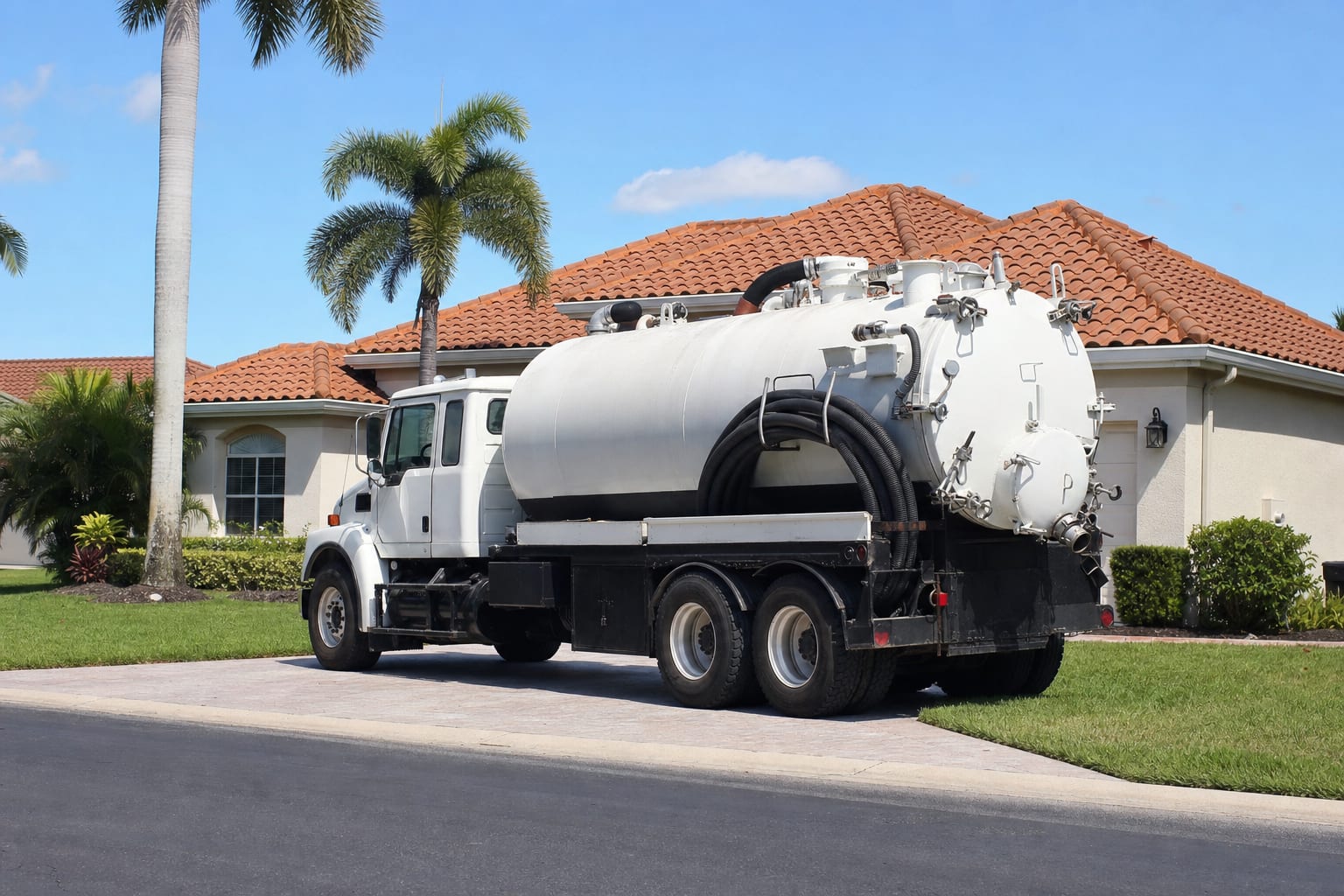
Scheduling septic pumping in St James City
St James City requires a longer dispatch from Cape Coral. Many homes also sit behind gates or on narrow canal lots. Call with the address, arrival date, truck access, last pump date, and lid location.
Review the full service area or start with Cape Coral septic pumping. For an active backup, overflow, or sewage odor, request emergency septic service.
What is pumped out of the tank is called septage. Land application of septage has been prohibited in Florida since January 1, 2016 under Fla. Stat. 381.0065(6). Septage pumped from your tank must be hauled to a receiving facility approved by the Florida Department of Environmental Protection.