
A Cape Coral homeowner can use three to five years as a reminder to check the system, but the calendar should not replace an inspection. The useful question is whether sludge and scum are close enough to the outlet to threaten the drainfield.
The short answer
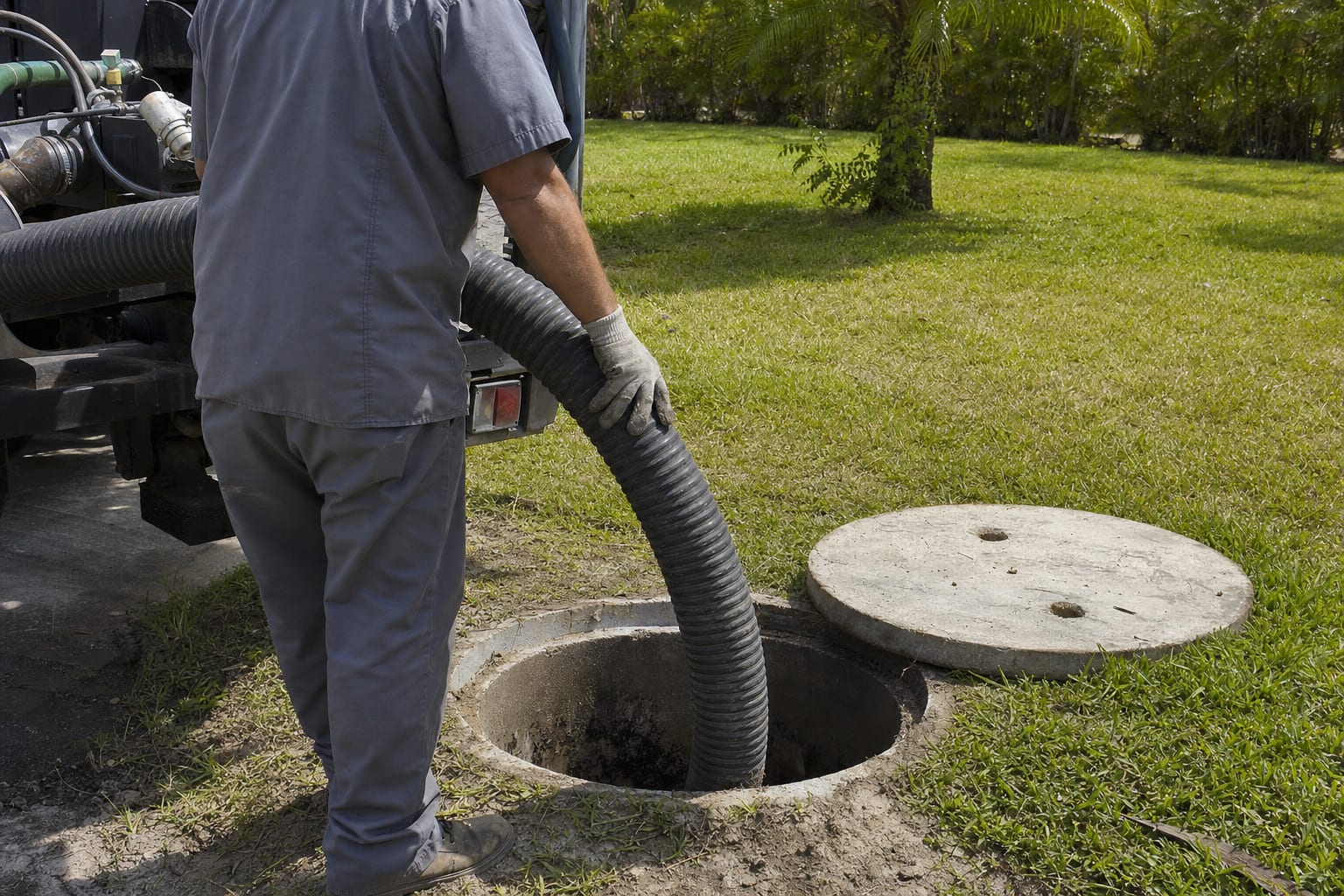
The U.S. EPA says an average household system should be inspected at least every three years and that household tanks are typically pumped every three to five years. DOH-Lee also publishes the three-to-five-year reminder.
That range is maintenance guidance, not a Florida rule requiring every tank to be pumped on the same date. A service record showing the solids measured during the last visit is more useful than guessing from the age of the house.
Four factors that change the interval
- Tank capacity: a smaller tank reaches its working solids limit sooner under the same household load.
- Number of occupants: more people usually means more wastewater and solids entering the tank.
- Water-use pattern: leaks, back-to-back laundry loads, and heavy guest use push more water through the system.
- Garbage-disposal use: ground food adds solids that the tank must retain.
When to check sooner
Do not wait for the calendar if several drains slow together, toilets gurgle, sewage odors appear, an alarm sounds, or the drainfield becomes wet or unusually green. Those symptoms can come from a full tank, clogged filter, damaged component, saturated drainfield, or line problem. A pump-out may create capacity, but it does not automatically repair the underlying cause.
Also check sooner when you have no reliable service history, have just bought the property, increased the number of occupants, started using the home full time, or added a high-water-use fixture.
What to record at every visit
- Date, company, and pump-out receipt.
- Tank size and whether every accessible compartment was emptied.
- Measured sludge and scum levels, if recorded.
- Condition of the visible inlet and outlet baffles, filter, lids, and risers.
- Tank and drainfield location for the next owner or service visit.
Use those measurements to set the next inspection instead of automatically repeating the same interval. If you need a baseline, schedule a septic inspection or request tank cleaning when the service history is unknown.
Source review
Primary sources
Reviewed July 18, 2026. Agency requirements, fees, and project schedules can change; follow the linked agency page when it differs from this guide.