
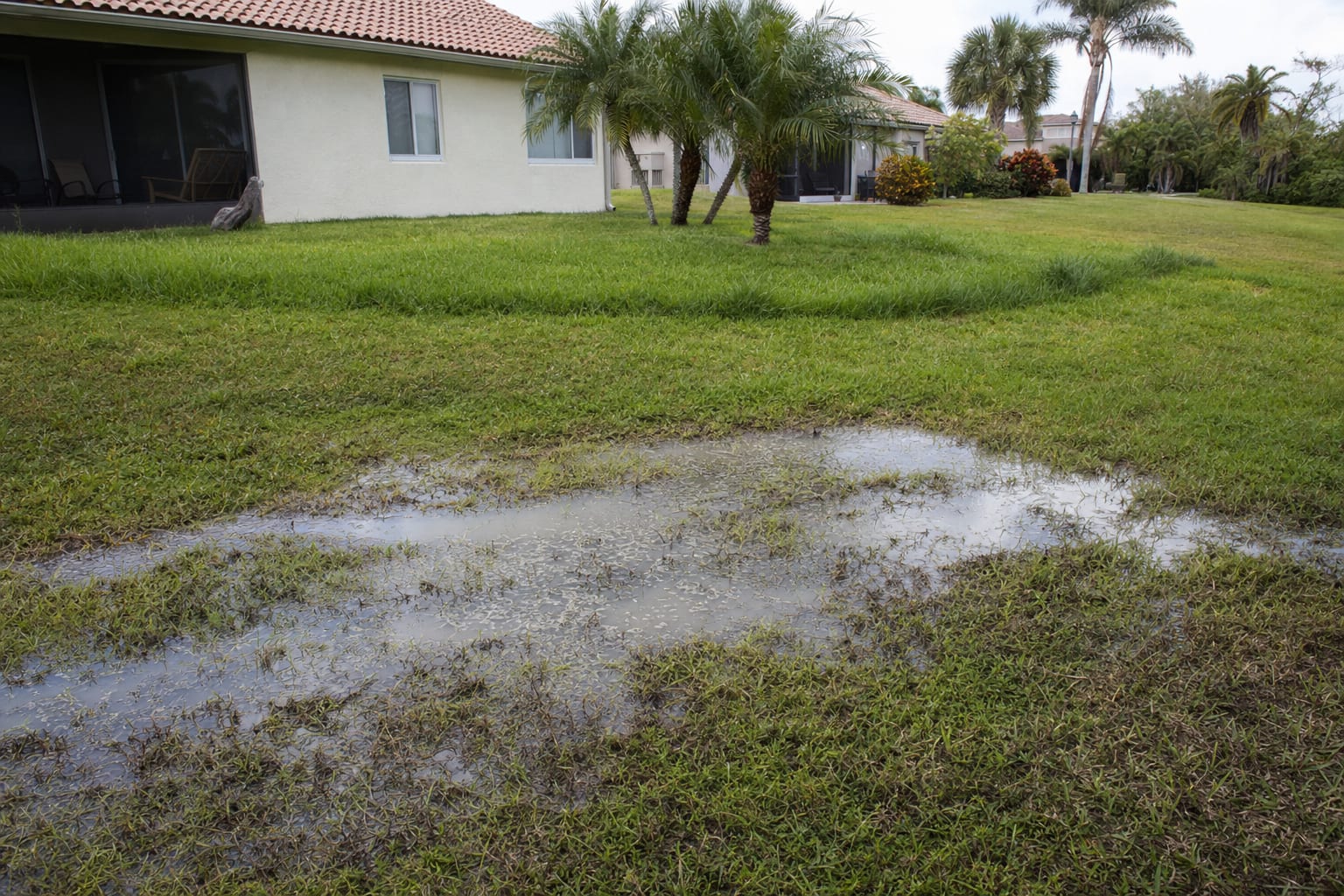
Floodwater and a high groundwater table can remove the unsaturated soil space a drainfield needs. The immediate goal is to avoid adding wastewater, prevent exposure to sewage, and wait until the site is safe to evaluate.
While the ground is flooded or saturated
- Reduce water use sharply. Delay laundry, dishwashing, long showers, and other nonessential flows.
- Do not open or pump the tank. The EPA flood guidance warns that pumping in saturated conditions can allow mud into the tank or cause a tank to float and damage connected piping.
- Stay away from sewage and floodwater. Keep children and pets out of contaminated areas and avoid skin contact.
- Avoid electrical components. Do not handle a submerged pump, alarm, control panel, or connection until a qualified person has made it safe.
- Keep vehicles off the drainfield. Saturated soil compacts easily and heavy equipment can damage buried components.
If sewage is backing into the house
Stop unnecessary water use immediately. Avoid flushing toilets or running fixtures just to test whether the line has cleared. Keep people away from affected rooms and call for professional help. An emergency visit can help determine whether the immediate restriction is in the building line, tank, filter, pump, or saturated drainfield.
A pump-out during saturated conditions is not a safe automatic response. Tell the dispatcher whether standing water covers the tank or drainfield so conditions can be assessed before work begins.
After floodwater recedes
EPA recommends a professional inspection when damage is suspected. The tank or pump chamber may contain silt and debris, covers or inspection ports may have shifted, electrical connections may be damaged, and erosion may have exposed or undermined components.
- Check that lids and access covers are secure without entering or leaning into the tank.
- Have pumps, floats, alarms, and wiring checked before restoring normal operation.
- Ask whether the tank and lift station need pumping after the soil is no longer saturated.
- Document settlement, erosion, odors, wet ground, and changes in drainage.
- If the property uses a private well, follow local health guidance for testing before drinking the water.
Why patience matters
UF/IFAS guidance on flooded septic systems explains how storms and groundwater rise can interfere with treatment. Some systems recover as the water table drops; others reveal physical damage or persistent drainfield failure. Request urgent help for active backups and a drainfield evaluation for symptoms that continue after the site dries.
Source review
Primary sources
Reviewed July 18, 2026. Agency requirements, fees, and project schedules can change; follow the linked agency page when it differs from this guide.