Grease Trap Cleaning Cape Coral FL

Commercial kitchens in Cape Coral and Fort Myers run on scheduled interceptor service. Miss it and the fine, the backup, or the health inspection finds you first.

Mon–Sat, 7:00 AM – 7:00 PM · Emergency service 24/7

Grease trap cleaning in Cape Coral is commercial work on a schedule your fryers and covers set.

Why the schedule is the whole job

An interceptor gives wastewater time to sit still. Fats and oils float, solids sink, and the cleaner water between them leaves through the outlet. As the cap thickens and solids build, that middle layer shrinks and the unit passes grease into the building drain while still looking serviceable from above.

What a grease trap cleaning visit covers

The unit is pumped out completely: grease cap, water column, and the settled solids a rushed crew leaves behind. Walls and baffles get scraped, the tees are checked, and the accumulation depth is recorded so the next interval comes off your kitchen, not a default.
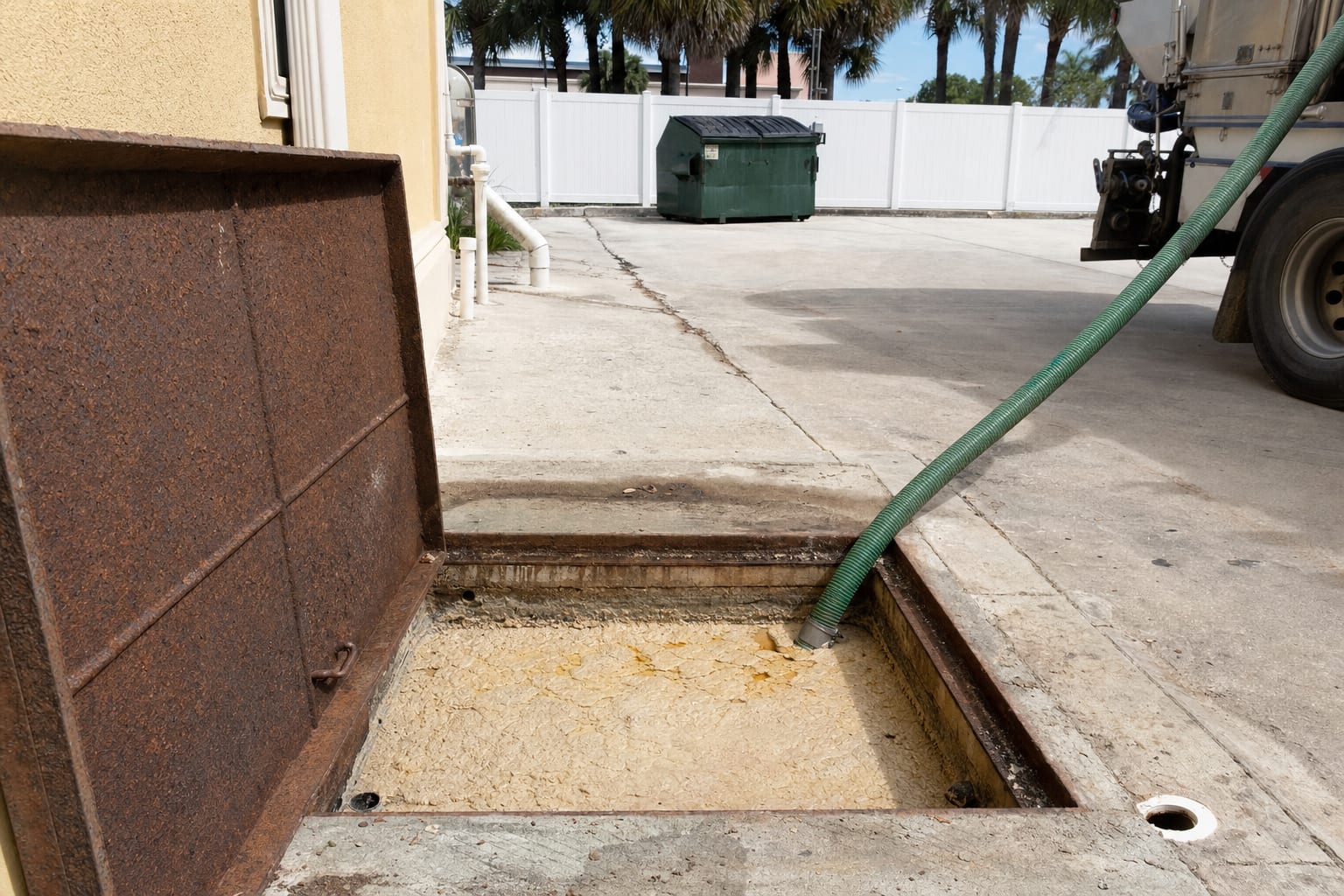
Vacuum hose lowered into an opened tank to remove the full contents rather than skimming the surface layer
Skim the cap, leave the solids, and the unit looks serviced while its volume shrinks.

What to have ready when you call

  • The unit size and whether it is indoors, under a sink or in the ground.
  • The last service date and whether drains are already slowing or backing up.
  • Your service window, gate access and the route a vacuum truck can use.
  • Whether this is recurring service or an urgent overflow.

The permit rule behind who can haul grease trap waste

Florida Rule 62-6.010(1), F.A.C., sweeps grease interceptors into the same requirement as septic tanks: a company hauling grease trap waste needs an annual septage disposal operating permit for the county it operates in.

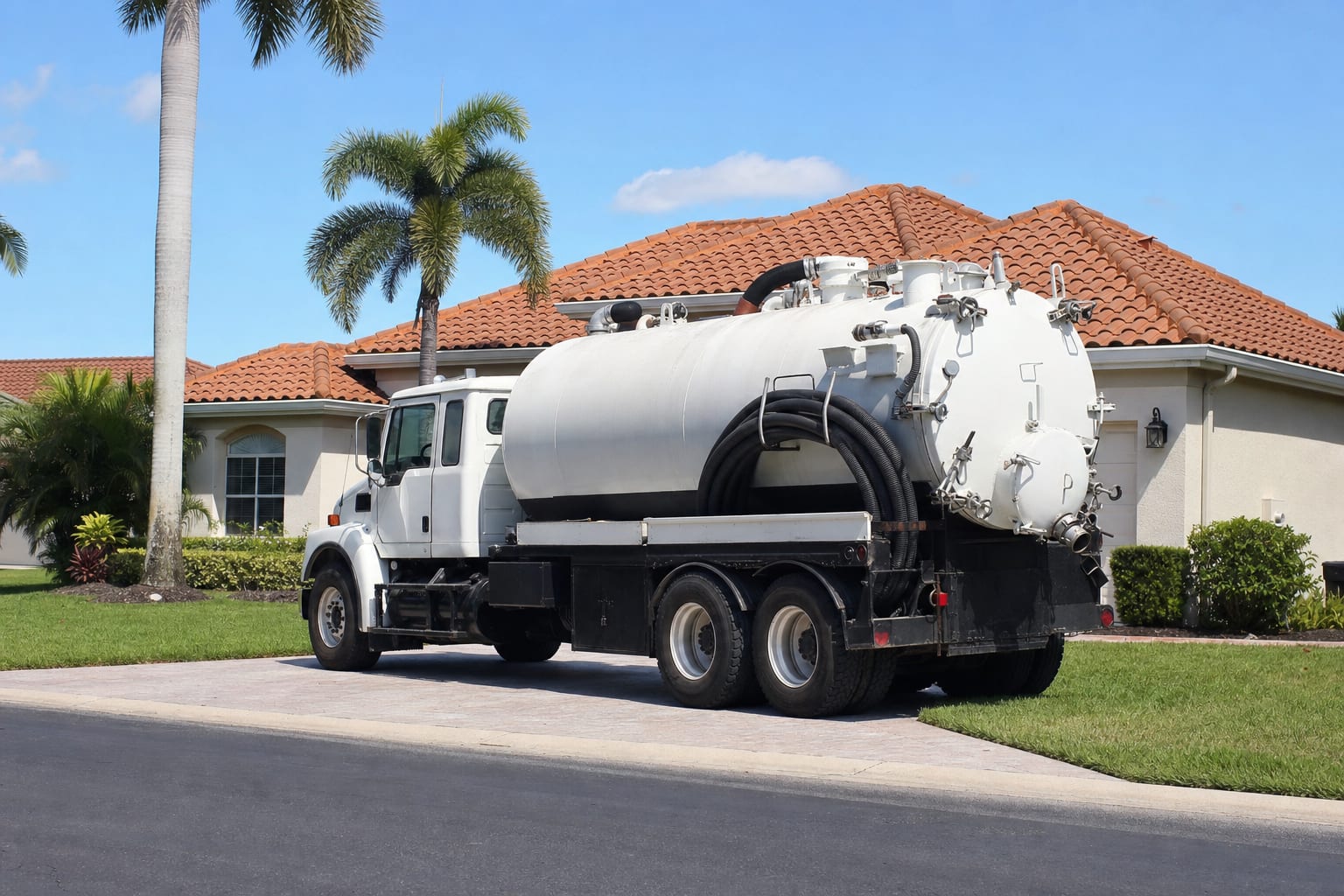
Florida Rule 62-6.010(3) requires a septage pumper to display its operating permit number, company name, phone number, and waste tank capacity permanently painted on the service truck in letters at least three inches tall. Removable magnetic signs expressly do not satisfy the rule. If a truck turns up with a magnet on the door, ask questions.

A septic pump truck of the kind that services commercial grease traps in Cape Coral and Fort Myers
A four-second compliance check from the back step.

Florida’s onsite sewage program transferred from the Department of Health to the Department of Environmental Protection on July 1, 2021 under the Clean Waterways Act. DEP now sets the statewide rules in Chapter 62-6, F.A.C. (formerly 64E-6), but permitting and inspections are still handled county by county as the transition phases in. In Lee County, which has not transitioned, septic permits and inspections still come from the Florida Department of Health in Lee County rather than DEP.

Where the waste ends up

Grease trap contents are regulated waste. They do not go in a dumpster, on a field, or down a manhole. Land application of septage has been prohibited in Florida since January 1, 2016 under Fla. Stat. 381.0065(6). Septage pumped from your tank must be hauled to a receiving facility approved by the Florida Department of Environmental Protection. Ask where the material is hauled and what the service record will include.

Grease trap service across Cape Coral, Fort Myers, and Lee County

Cape Coral and Fort Myers, plus the rest of Lee County. See areas we serve. Fort Myers proper is substantially sewered, so there is little septic work there, but the kitchens are dense and every one has an interceptor.

Related work on the same trip

If your site has a lift station moving waste to the main, handle both on one visit: see lift station and pump service. A trap already backed up is emergency service. On a tank, septic pumping applies too.

Grease trap questions from Cape Coral operators

What information do you need to schedule grease trap cleaning?

Call with the trap or interceptor size, its location, truck access, preferred service window and the date it was last pumped. If the size is unknown, photos of the lid and any equipment label help the contractor plan the visit.

How often does a grease trap need to be pumped?

A busy fryer-heavy line with a small under-sink trap can need service every two to four weeks; a large in-ground interceptor may go a quarter or longer. The industry working rule: fats, oils and solids should not exceed about a quarter of the unit’s liquid depth. Past that it stops separating. Let measured accumulation set the interval.

Does a grease trap need a licensed hauler, or can my staff scoop it?

It needs a licensed hauler. Florida Rule 62-6.010(1) puts grease interceptors under the same annual septage disposal operating permit requirement as septic tanks, so a hauler needs that permit for the county it works in. Skimming the top into a drain or dumpster earns a violation and a blockage.

Where does the grease actually go?

To an approved receiving facility, with the load manifested. Land application of septage has been prohibited in Florida since January 1, 2016 under Fla. Stat. 381.0065(6). Septage pumped from your tank must be hauled to a receiving facility approved by the Florida Department of Environmental Protection. Grease trap waste falls under the same framework. If a hauler cannot name the receiving facility your waste goes to, keep asking.

How do I know the hauler at my back door is legitimate?

Read the truck. Florida Rule 62-6.010(3) requires the operating permit number, company name, phone number and waste tank gallon capacity permanently painted on the vehicle in letters at least three inches tall. Removable magnetic signs expressly do not satisfy the rule, so a door magnet answers the question.

What happens if a trap gets skipped?

Grease carries into your building drain, where it cools and hardens on the pipe wall. The first symptom is a slow floor drain; the second is a backup during service. An overflowing interceptor is a sanitation problem an inspector can write up, and hardened lines may require jetting in addition to pumping.

Can you service us outside kitchen hours?

That is normally the point. Grease trap service is unpleasant to run through a working dining room, so most interceptors get pumped before open, after close, or on a dark day. Give us your service window and it goes into the route.

Put your interceptor on a schedule

Tell us the unit size, your service window, truck access, and when it was last pumped. The interval gets set from what the trap accumulates.

Call (239) 555-0173 Septic pumping · Cape Coral & Lee County