
Pine Island has no central sewer or published conversion project. Properties with onsite systems need routine pumping, accessible tank lids, and protected drainfield areas.
Why Pine Island properties rely on septic systems
Lee County's 2023 Countywide Wastewater Management Plan put about 75% of the county population on centralized sewer. Pine Island sits outside that centralized network, and unlike areas of Cape Coral north of Pine Island Road, it is not part of the city's Utilities Extension Project. Repairs and replacements therefore depend on the site's available area, groundwater, and current onsite-wastewater rules.
How groundwater affects Pine Island systems
The island takes about 57 inches of rain a year, about two-thirds of it between June and September, so the 24 inches of separation Florida requires between the drainfield and the seasonal high water table under Rule 62-6.006(2), F.A.C. is not a given. Where the lot cannot make it, clean sand fill raises the absorption surface and you are building a mound rather than a conventional field at natural grade.
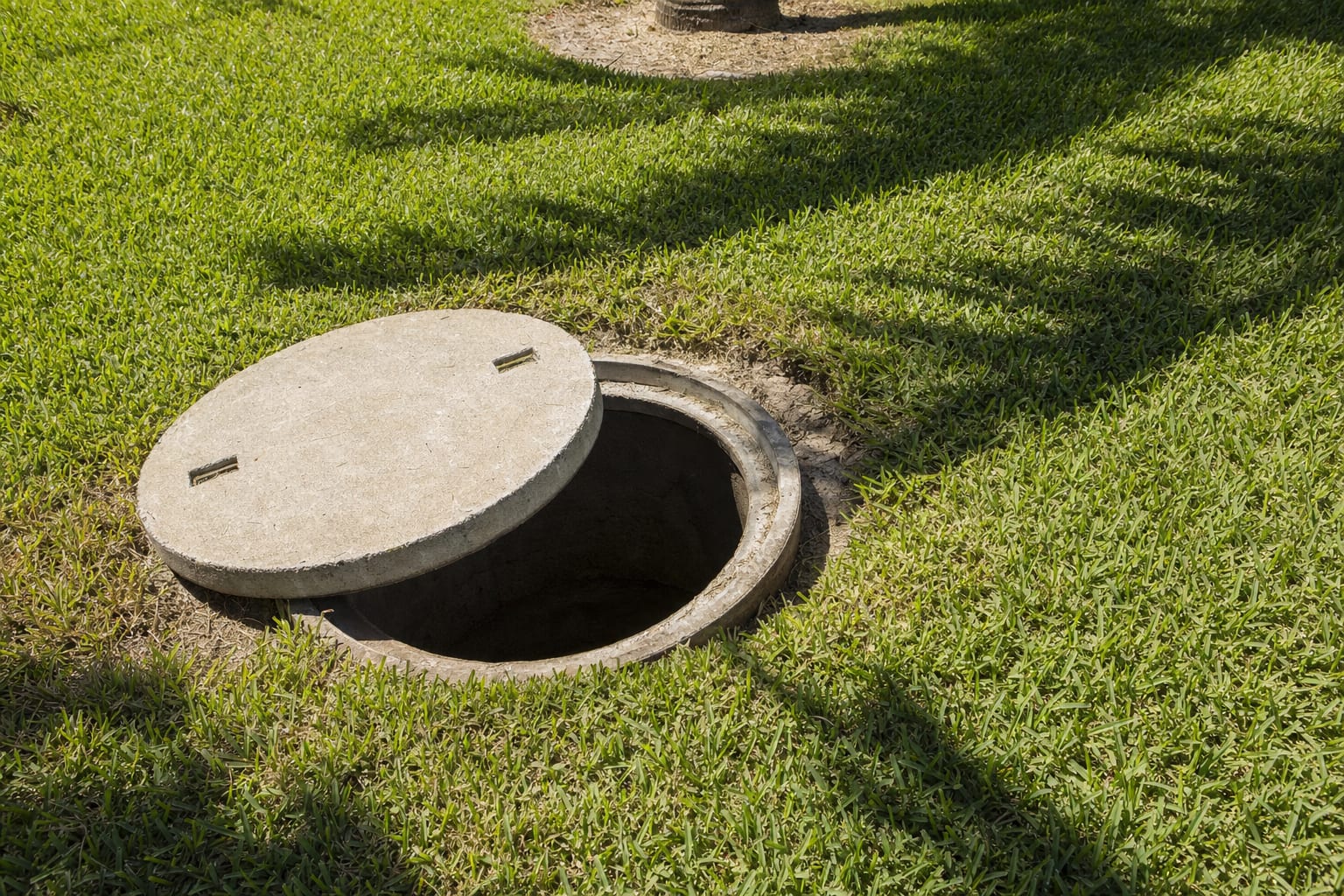
Scheduling a pump truck on Pine Island
Everything reaches the island the same way: west on Pine Island Road, through Matlacha, over the bridge. There is no alternate route, so call with the address and preferred service window. A scheduled inspection can catch a filling tank before it becomes an emergency.
Seasonal homes and rural properties
Before returning after a long vacancy, check the yard, alarms, and indoor fixtures for signs of trouble. Set the pumping interval from occupancy, service history, tank capacity, and measured sludge and scum rather than the calendar alone.
Pine Island service areas
Service reaches canal-front and seasonal homes in St James City. It also covers rural onsite systems in Bokeelia. In Matlacha, tight lots and nearby water affect access.
For routine service, start with septic pumping. If you notice soggy ground, unusual plant growth, odors, or slow drains, review drainfield repair and request an inspection.
What is pumped out of the tank is called septage. Land application of septage has been prohibited in Florida since January 1, 2016 under Fla. Stat. 381.0065(6). Septage pumped from your tank must be hauled to a receiving facility approved by the Florida Department of Environmental Protection.