Septic System Installation Cape Coral FL

Building north of Pine Island Road on a lot with no sewer at the street means a permitted system, and in much of Cape Coral the water table decides which kind you are allowed to build.

Mon–Sat, 7:00 AM – 7:00 PM · Emergency service 24/7

On a Cape Coral lot, the water table decides which septic system installation you are allowed to build. Native soil, required fill, lot access and the permitted design determine the work involved.

Check your UEP phase before you buy a system

Find out where your street sits in the UEP first. Cape Coral is converting from septic to sewer phase by phase, working north from Pine Island Road. If sewer reaches your street soon after you install, you get 180 days from the Notice of Availability to connect and 90 days after that to abandon the tank.

The City's "Find Your Future Utilities Extension Area" lookup answers this for an address, and the UEP hotline is 1-833-227-3837. See septic tank abandonment for how that ends.

The 24 inches that determine the system type

Florida requires 24 inches of separation between the bottom of the drainfield and the seasonal high water table, under Rule 62-6.006(2), F.A.C. Seasonal is the operative word: the rule is written against the wet season, not the dry February morning someone digs a test hole. Cape Coral gets roughly 57 inches of rain a year, about two-thirds of it June through September, and was platted in 1957 on septic tanks and shallow wells. The ground is flat and sandy and the water is close.

Cross-section diagram of a septic drainfield showing the distribution pipe, gravel trench, and the 24 inches of separation Florida requires between the trench bottom and the seasonal high water table
The 24 inches Rule 62-6.006(2) requires, measured from the trench bottom.

Common septic system types in Cape Coral

SystemWhen you get one
Conventional gravity The lot holds the 24-inch separation at or near grade. Tank, distribution box, gravity drainfield, no pumps.
Mound system The lot cannot make the separation naturally. Sand fill, a larger footprint, usually a pump.
Aerobic treatment unit (ATU) Where treatment must beat a plain tank: tight lots, difficult setbacks, or a performance-based permit. Adds a blower, power, and maintenance.
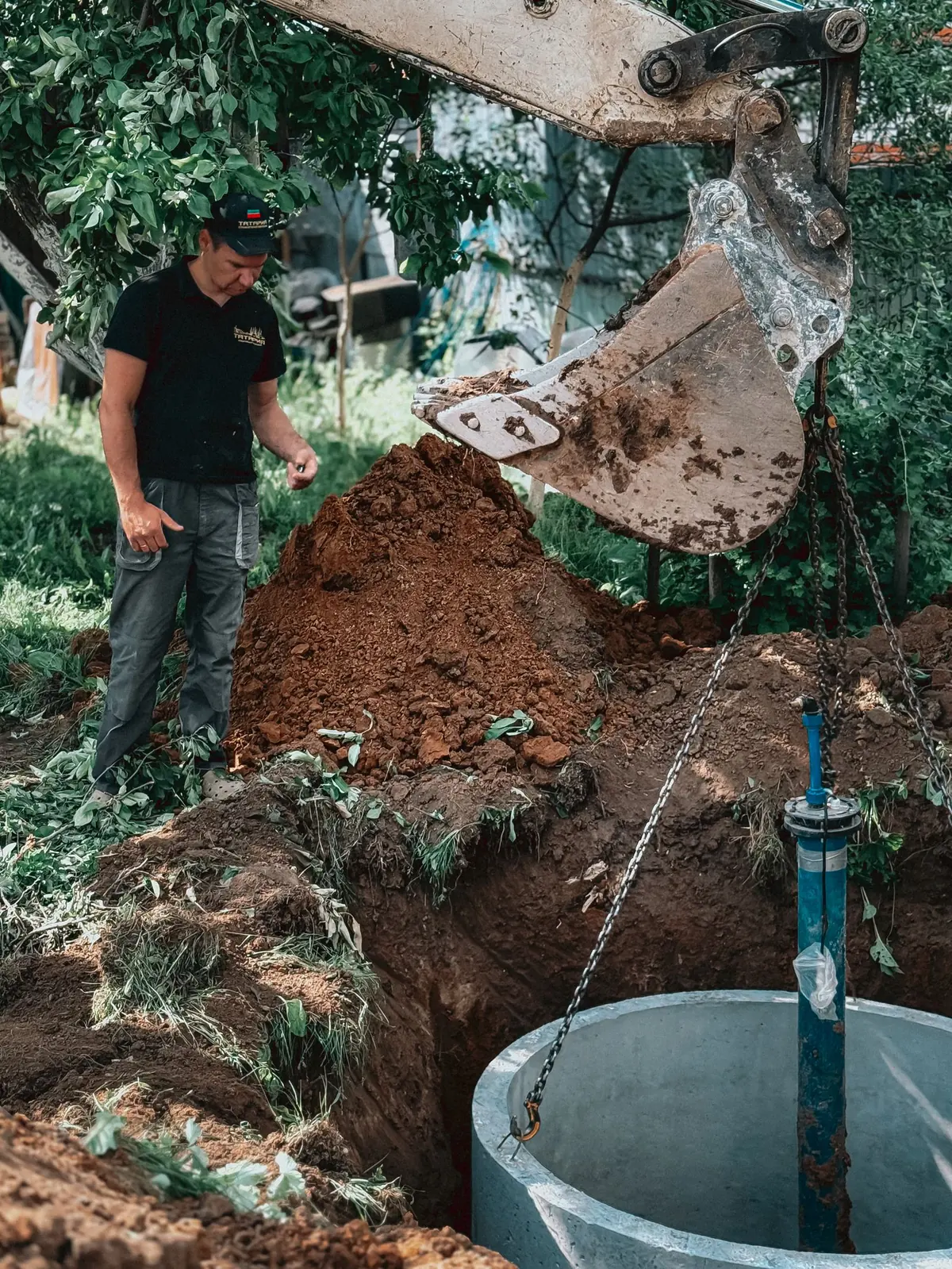
Excavator opening a trench for a new septic system drainfield on a sandy Southwest Florida lot
A mound system adds imported fill, a larger graded footprint and, in many designs, a pump.

What the DOH-Lee permit involves

  1. Soil evaluation. A licensed soil scientist logs the profile and establishes the seasonal high water table. The system cannot be designed before this.
  2. Application. DOH-Lee reviews the site evaluation and proposed design. Confirm current forms and agency requirements at 239-690-2100.
  3. Review. Generally a few weeks. The permit specifies the system type and size.
  4. Installation. By a licensed septic system installer, to the permitted design.
  5. Inspection. DOH-Lee inspects before the system is covered.

The permit comes from the Florida Department of Health in Lee County, 2295 Victoria Ave, Fort Myers, FL 33901. Florida’s onsite sewage program transferred from the Department of Health to the Department of Environmental Protection on July 1, 2021 under the Clean Waterways Act. DEP now sets the statewide rules in Chapter 62-6, F.A.C. (formerly 64E-6), but permitting and inspections are still handled county by county as the transition phases in. In Lee County, which has not transitioned, septic permits and inspections still come from the Florida Department of Health in Lee County rather than DEP.

Where new systems still get built

Almost all of it is north of Pine Island Road, particularly the 33909, 33993, and 33991 ZIPs, on vacant platted lots with no main at the street. As of Lee County’s 2023 Countywide Wastewater Management Plan, about 75% of the county's population was on centralized sewer. The island communities on our areas we serve page have none at all.

Cape Coral septic installation questions

What determines the type of new septic system a Cape Coral lot needs?

The soil evaluation, seasonal high water table, setbacks, available drainfield area and projected wastewater flow determine the design. The Florida Department of Health in Lee County reviews the application and inspects the completed system.

Why do so many Cape Coral lots need a mound system?

Florida requires 24 inches between the drainfield bottom and the seasonal high water table, under Rule 62-6.006(2), F.A.C. Cape Coral is flat, sandy and cut through with more than 400 miles of canals, so many lots cannot dig down and keep that clearance. Sand fill raises the absorption surface until the 24 inches exist. That is a mound system, and why the number doubles.

Who decides which system I am allowed to install?

Not the installer, and not us. A licensed soil scientist logs the soil profile and establishes the seasonal high water table. That evaluation goes to DOH-Lee with the permit application, and the permit specifies the system. Anyone quoting before the soil is looked at is guessing.

How long does the permit take?

Generally a few weeks once a complete application is in, and the soil evaluation has to happen before the application is complete. Fees and timelines change, so confirm both with the Florida Department of Health in Lee County at 239-690-2100.

Should I install a septic system if UEP sewer is coming to my street?

Check the phase first. A street close in the Utilities Extension Project queue means a five-figure purchase you may have to abandon within a few years: 180 days to connect after the Notice of Availability, then 90 days to abandon the tank. In a design or study phase, a permitted system is sensible. The City’s "Find Your Future Utilities Extension Area" lookup gives the phase; the UEP hotline is 1-833-227-3837.

Can a pumping company install my system?

Only if it also holds the right license. In Florida the credential lives under Part III of Chapter 489, Florida Statutes, and pumping and installing are separate registrations. Ask which one a company holds before it proposes an installation. This site routes calls to an independent contractor. If installation is outside that contractor’s licensure, you will be told so.

Does anyone approve or certify the system for me?

No private company approves a septic system in Florida. The permit and the final inspection come from the Florida Department of Health in Lee County. DEP registers septic contractors statewide; it does not endorse them, and neither DEP nor DOH-Lee pre-blesses any company’s work. Anyone advertising guaranteed permit approval has no authority to deliver it.

Planning a new system on a Cape Coral lot?

Tell us the address and whether a soil evaluation has been done. The first useful answer is which UEP phase you are in and whether installing is the right purchase.

Call (239) 555-0173 Septic pumping · Cape Coral & Lee County